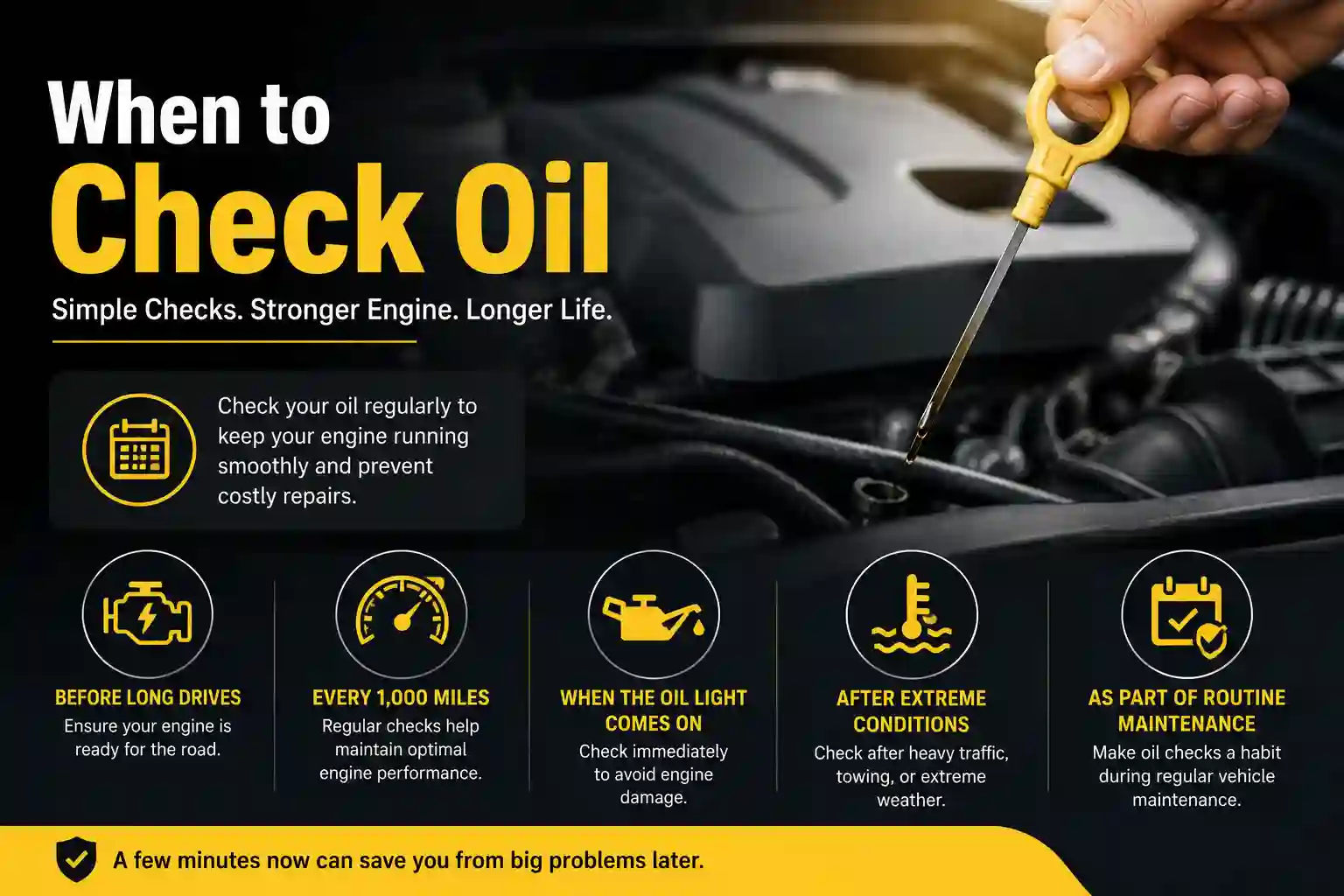

A fleet maintenance technician once told me something that stuck: consistency beats precision. He wasn’t dismissing accuracy he meant that checking oil at the same engine temperature state every time matters more than chasing the theoretically perfect moment. Most of the confusion around when to check oil comes from people treating it like there’s one universally correct answer, when really the right time to check oil depends on your engine, your manual, and what you’re trying to learn from the reading.
I’ve had this debate more times than I can count with mechanics, with forum threads on BobIsTheOilGuy, with the Car Care Nut’s YouTube videos circulating opposing advice. The honest answer is that both cold and warm checks work, provided you understand why the timing matters and stay consistent.
Why Oil Temperature Changes What the Dipstick Tells You
Oil expands when hot and contracts when cold that’s basic physics, but the actual numbers surprise people. Oil expands 0.7 percent per 5 degrees Celsius of temperature increase. Run that across the temperature difference 20C to 90C and you get a 9.8 percent expansion difference in volume. In an engine holding 4 liters of oil, that 9.8 percent swing works out to roughly 400ml about 13 ounces. That’s a meaningful amount on a dipstick with a narrow measurement window between the ADD and FULL marks.
This is exactly why checking oil right after a long hard drive gives a falsely low dipstick reading: oil is still distributed around the engine and hasn’t settled, so the pan reads emptier than it actually is. Wait too little and you risk topping up oil that doesn’t need topping up. But there’s a flip side that catches people out just as often: overfilling cold oil when topping to the full line.
If you check oil cold and add until you hit FULL, then later check it warm, the expanded volume can push past the safe range. Foam fouls oil pump and foam causes cavitation in bearings when the level runs too high, so neither cold nor warm checks are foolproof they just fail in different directions.
Manufacturer guidance genuinely splits on this. Some recommend checking warm; others recommend cold. Toyota Sequoia owner’s manual operating temperature instructions are explicit that checking should happen with the engine at operating temperature. Hyundai Kia recommend operating temperature check as well. Meanwhile, plenty of older designs and most general advice lean toward cold engine oil checks for stability.
The 99 to 2014 Vortec engines in Chevy trucks are a documented exception where oil doesn’t return to the pan quickly owners overfilled crankcase situations have happened repeatedly because people checked too soon after driving, not realizing this engine specifically requires overnight cold checks only. Consult owner’s manual to determine which is best for your specific vehicle, because vehicle specific timing requirements really do vary this much.
If your manual is silent or you’re not sure, here’s the practical compromise most experienced people land on: wait 10 to 15 minutes after turning off the engine. That’s long enough for oil to drain back into sump from the upper engine, but short enough that you’re not waiting around all day. For very hot or large engines, up to 30 minutes is reasonable. The Car Care Nut’s 60k ATF drain and fill recommendation aside, his broader stance and a stance shared across most professional sources is to check consistent same temperature state every time so your readings are comparable to each other.
Safety matters here too. Hot oil can reach 250 degrees Fahrenheit, and there’s a genuine burn risk hot oil if you go digging around a freshly run engine. Checking when cold is safer and reduces risk of burns less turbulence and oil splashing happens with a cold check as well, which makes for a cleaner read regardless of the temperature debate.
How Often You Should Be Checking — Beyond the Monthly Default
Check oil once a month is the baseline almost every source agrees on regular monthly checks for the average driver covers normal use. But “normal use” is doing a lot of work in that sentence, and most drivers don’t actually fall into that category.
Severe driving conditions change the calculation substantially. Frequent short trips, stop-and-go traffic, towing a trailer, hauling heavy cargo, driving up steep inclines, extreme temperatures whether heat or cold, dusty roads, and extended idling all count. Trips under 10 miles specifically qualify as severe the engine never reaches full operating temperature, so moisture and combustion byproducts don’t burn off properly. Temperatures below 32 degrees Fahrenheit or above 90 degrees Fahrenheit also push your driving into severe territory, as does hilly terrain.
Here’s a number that puts this in perspective: 78 percent of drivers qualify as severe service under at least one of these categories. That means the “normal” interval most people assume applies probably doesn’t apply to them. Severe service shortens oil life by 50 percent or more compared to ideal highway driving.
If you’re towing regularly, a 200 mile tow is roughly equivalent to 400 plus miles of normal driving in terms of stress on the oil towing increases internal friction, towing raises oil temperatures, and towing causes faster breakdown of the additive package. Change oil immediately after extended towing trips and monitor oil temperature while towing if your vehicle has that readout. Using heavy-duty or diesel-rated oil while towing frequently is also worth discussing with your mechanic.
If your driving genuinely is mild San Diego mild climate example is the case study often cited, with stable temperatures and minimal stop-and-go then normal intervals actually apply, and you’re in the minority that can rely on standard advice without adjustment.
For vehicles with an oil life monitor, there’s a specific recalibration worth knowing: if you drive primarily in severe conditions, consider changing oil when the monitor shows 40 to 50 percent rather than waiting for 0 to 15 percent. The monitor is optimistic for severe use because the algorithm doesn’t know your specific oil quality or degradation pattern it estimates based on assumptions that may not match how hard you’re actually using the vehicle. Check your owner’s manual for the severe service schedule, not the normal schedule, because most manuals do include both.
When a Leak or High Mileage Changes Your Check Frequency
Older engines 10 plus years or 100000 plus miles are more prone to wear in gaskets, seals, and piston rings, all of which can leak oil. A known oil leak changes everything about how often you should check. Even a small leak of a few drops per day accumulates into a real problem over time. If you’ve spotted oil spots under your vehicle, or your mechanic has noted a leak during a service, check oil levels twice a week and keep a spare oil bottle in the trunk for emergency top-ups.
Oil consumption issues are distinct from leaks but deserve the same vigilance. Piston ring issues, valve stem seals, and PCV system concerns are the usual suspects behind a vehicle burning oil internally rather than leaking it externally. A sudden drop in oil level is a litmus test that something’s wrong natural consumption in a healthy engine is gradual and small, since oil is slowly burned during combustion and no engine is 100 percent sealed.
But a sharp, sudden change from your normal pattern deserves investigation, not just a top-up. Specific platforms have documented consumption problems 2011 to 2014 Kia platforms are a known example where owners needed to check oil as often as once a week or even daily depending on severity.
There’s also a seasonal pattern worth understanding: condensation and contamination happen overnight as the engine cools. Moisture from combustion condenses inside the crankcase, mixing with oil and reducing its effectiveness left unchecked, this raises corrosion risk inside the engine. Monthly checks catch this early before it compounds. Infrequent top-ups are usually the root cause behind drivers getting caught out by low oil the early warning signs of gradual consumption are there, but only if you’re actually looking.
The Warning Signs That Mean You Should Check Right Now — Regardless of Schedule
Certain signals override any monthly or biweekly schedule and demand an immediate check. A dashboard warning light usually a yellow or red oil can symbol is the most obvious. A rising or creeping temperature gauge, especially with no other explanation like towing, is another. Leaks underneath the car, visible puddles, knocking or ticking engine noise, a rougher than usual engine sound, blue smoke from the exhaust, and reduced fuel efficiency all warrant checking the oil immediately once it’s cooled down and safe to do so.
Don’t rely on warning lights alone all cars consume some oil naturally, and a sensor-based system might lag behind reality. Many newer cars have an electronic oil sensor that warns at the minimum safe level, sometimes surfaced through a digital readout in the infotainment system. These are useful, but don’t rely on the digital readout with blind faith a physical dipstick check still matters even with smart sensors onboard, because smart sensors aren’t magical. Nine times out of ten, when a transmission or engine shop sees serious damage from oil neglect, it traces back to someone trusting a system that either failed or was ignored.
Reading the Oil Itself — Not Just the Level — While You’re Already Under the Hood
Since you’re checking the level anyway, take the extra few seconds to read the oil itself. Amber and transparent is healthy oil golden amber colour fresh oil with a light brown normal colour as it ages slightly. Dark or contaminated oil, black or burnt oil, gritty oil texture, and thick oil texture are all signals worth noting, though oil colour naturally darkens over normal use and dark colour alone isn’t definitive combined with other signs is when it becomes a reason for concern.
Milky or foamy oil is a coolant sign and should never be dismissed; metallic particles in the oil point to internal wear. Rub a drop between your fingers: smooth to the touch is healthy, thick and grainy means reduced protection. Check translucency it should not be milky and check smell, since a pungent burning odour or fuel odour both indicate contaminated oil rather than the fresh oily smell you’d expect from clean oil. If the level is fine but the oil itself looks dirty, schedule an oil change soon rather than waiting for the next mileage milestone, because oil that’s losing its protective properties through sludge formation from short trips is degrading regardless of what the odometer says.