
Every time I’ve seen an engine fail from oil neglect, it’s followed the same pattern. The driver wasn’t reckless they just assumed everything was fine because nothing had warned them otherwise. The oil warning light hadn’t come on. The engine sounded normal. And then somewhere between the previous check and the current moment, the level had dropped past the point where the oil lubrication system could do its job properly. Engine destroyed 20 minutes low oil in one documented case I was personally involved in. A quart of oil would have prevented it.
Learning how to check oil level correctly is one of the most high-return skills in car ownership. It requires no tools, takes under five minutes, and gives you information that no dashboard alert reliably provides. Understanding how to read what the oil is actually telling you level, condition, and consumption pattern puts you ahead of most problems before they become expensive ones.
Understanding What Your Oil Level Protects — Before You Even Open the Bonnet
Engine oil isn’t doing one thing inside a running engine. It’s doing several simultaneously, and all of them depend on adequate volume. The bearing lubrication film between connecting rod lubrication points and the crankshaft depends entirely on continuous oil film between parts. If the oil path engine runs dry in those clearances, metal-on-metal contact begins immediately. The heat from increased friction at tight engine clearances doesn’t dissipate it concentrates and warps components.
Beyond friction reduction, heat dissipation oil carries warmth away from areas the coolant never reaches. Oil keeps engine clean by carrying combustion byproducts and debris in suspension toward the oil filter. Corrosion prevention, rust prevention, and engine sludge prevention are all functions of the additive package inside the oil additives that deplete with every heat cycle.
Oil viscosity affects pressure directly. Thin oil too low pressure because it flows through clearances too fast to build resistance. Thick oil struggles cold start because it can’t circulate quickly enough to reach critical surfaces before damage begins. The viscosity index improver stable temperature chemistry in modern oils maintains operating viscosity across the range but that chemistry shears down over time, leaving base oil partially oxidised viscosity thin. The oil still looks dark but has lost protective coherence oil viscosity feel thinner fingers when rubbed between them compared to fresh oil. That’s the viscosity breakdown end service life signal most drivers never notice because they never touch the oil.
What Goes Wrong Before the Check — Setup Errors That Give False Readings
Most oil level check errors happen before the dipstick is touched. Park on level ground completely level surface, flat driveway, flat location with no incline, no slope. Incline pools oil one end inaccurate inside the oil pan. Front to back level and side to side level are both required for the measurement to mean anything.
Temperature timing is the other critical variable.
preferred gives the most stable readings cold engine oil settled pan stable, cold morning check consistent, because the oil hasn’t been disturbed. The check before starting engine cold method eliminates thermal expansion error. Warm engine check acceptable works on many modern vehicles because manufacturer recalibrated dipsticks warm to read correctly at temperature but check owner’s manual timing recommendation first, as vehicle specific timing instructions vary.
Hot oil expands 0.00022 cubic feet per degree F, and a 20°F change shifts dipstick 0.3mm enough to cross MIN line or MAX line on tight tolerance engine 0.3mm reading error situations. False high reading hot engine results from oil volume genuinely expanding with heat. False high digital gauge hot occurs for the same reason on electronic systems. The Manchester winter idle one minute tip applies in cold climates: let engine idle one minute cold climate after shutting off before checking, giving oil time to settle without thermal contraction distorting the level.
For the IOLM intelligent oil life monitoring on IOLM Ford post-2016 vehicles, and digital gauge oil level systems in newer cars including the bar display red low green optimal blue high format the same timing applies. Cold digital gauge consistent reading is more reliable than a hot check. The 2024 Ford Maverick exact liters display represents how precise electronic oil monitoring has become, but even these sensors carry false warning light flickering cause risk from wear and sensor degradation.
The Oil Level Check Process — Every Step That Actually Matters
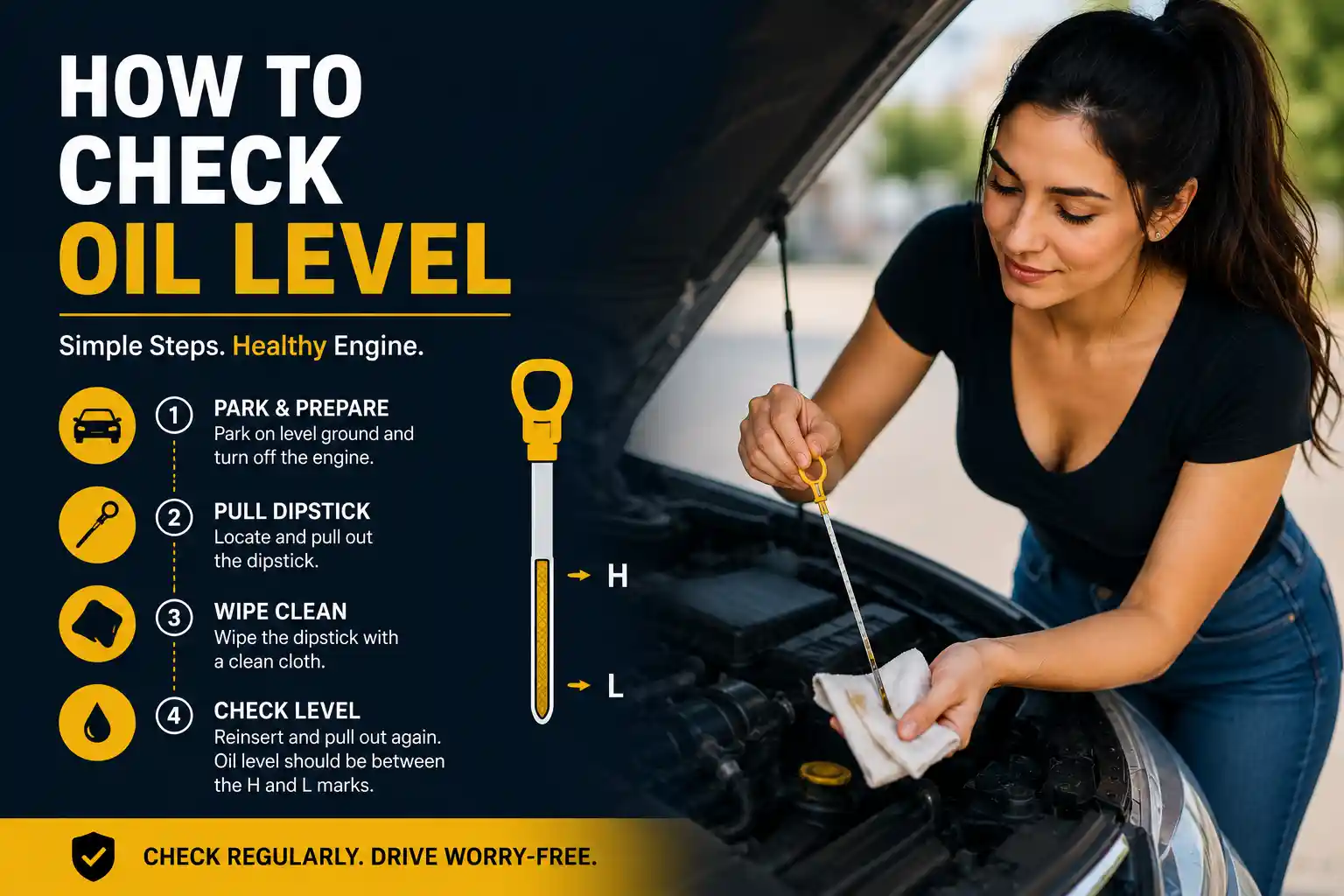
Pop the hood, open hood, locate dipstick. It’s a metal stalk with a grip stalk or metal loop at the top brightly colored handle in yellow handle or orange handle format, sometimes with ENGINE OIL label handle or OIL LEVEL label handle. Oil can symbol handle is also common. The front of engine dipstick position is typical. With multiple dipstick types engine present transmission dipstick nearby can look identical confirm engine oil vs transmission dipstick before pulling. Refer owner’s manual dipstick if in doubt.
Remove dipstick from tube. First reading inaccurate do not read first pull. Oil coats dipstick from running clings to the dipstick tube walls. Wipe dipstick clean using clean rag, use paper towel, or use lint-free cloth across the wipe oil-wet straight end all the way up.
Reinsert dipstick fully. Push back into tube, push all the way in, make sure clicks fully seated. A loose dipstick tip doesn’t reach the oil pan and reads low artificially. Wait a second or two, wait a few seconds. Pull dipstick back out. Examine both sides, read both sides. Hold dipstick steady horizontally and check oil between MIN MAX marks.
Oil level between marks correct nothing needed. Oil level below lower mark add immediately. Oil level above upper mark drain before driving. The dipstick markings vary: MIN line and MAX line labels, LOW mark and FULL mark text, H for high and L for low letters, or a crosshatched area. The oil film on dipstick, oil film position, oil sheen dipstick should fall within the measurement zone.
To top up: locate oil filler cap OIL marked cap or oil can symbol cap, often with viscosity printed cap showing a 5W-30 cap example reference. Remove oil cap, use clean funnel. Add oil gradually, add half quart increments. Recheck dipstick after each addition, check level after each pour. Add more if still low. Stop when between MIN MAX. Do not overfill. Tighten oil cap securely loose cap triggers oil leak and loose cap triggers warning light. Wipe up spills. Close hood. Run engine 1 to 2 minutes, shut off engine after running, recheck level after running. Oil should be between min max after run.
Keep funnel extra oil trunk for long journeys. Keep oil in boot emergency as a road trip habit. Record date mileage oil type added and track oil consumption log.
Reading Oil Condition Alongside Level — What the Oil Itself Tells You
The oil colour check starts on the first wipe. Amber oil fresh, golden translucent oil fresh, amber and translucent new oil with fresh oil slightly more viscous coherent feel between fingers. Dark brown black oil used and dark oil normal over time oil colour naturally darkens carrying combustion byproducts and debris in suspension. Oil consistency check and oil clarity check together tell more than colour alone: dark gritty oil needs change, the thick dark brown oil change decision combines colour with gritty grainy texture metal particles feel.
Note oil colour smell routine every time. Burnt oil smell different from normal dark oil. Oil smell burning leak sign points to external leakage onto hot surfaces. Metal particles oil wear, metal shavings dipstick visible in the oil film these indicate internal wear requiring certified technician inspection before further driving.
Milky oil chocolate milk appearance is the serious alarm. Coolant contamination milky oil from damaged head gasket milky oil or cracked cylinder head milky oil mixing coolant into the crankcase. Check for white smoke sweet exhaust odor coolant and sweet exhaust odour coolant confirmation from the tailpipe simultaneously. Oil contaminated causes harm quickly when coolant is present — this is a tow situation.
Foamy bubbly texture overfill coolant contamination means the crankshaft aerates oil overfill has created an air-oil mixture inadequate lubrication situation. Foam climbs quickly stop adding signal this warrants diagnosis, not topping up. Oil viscosity feel thinner fingers late in service life signals viscosity index improver shear breakdown and base oil partially oxidised viscosity thin, requiring an oil change regardless of mileage.
Oil Consumption Tracking — The Level Pattern That Predicts Engine Problems
Checking oil level once gives you a snapshot. Checking it regularly over time is diagnosis. Oil consumption tracking through a simple record oil level date mileage log reveals patterns one reading never shows. Normal oil consumption minor a small drop between services is expected. The concern threshold is 1 quart per 1000 miles concern, with the 1 quart per 1000 to 3000 miles manufacturer tolerance defining most OEM acceptable ranges. When consumption advances toward 1 quart per 500 miles overhaul threshold 0.95 liters per 1600 km concern tracking toward 800 km per quart overhaul that’s a mechanic discussion, not a top-up routine.
Abnormal oil consumption check investigates: burning oil internally worn piston rings, burning oil valve seals worn, PCV valve issues oil consumption. The Honda NHTSA oil consumption test formalises this process: a dealer oil consumption test form procedure requires document oil level 500 miles drive return, with fill VIN start mileage oil test recorded at the outset and return dealer lower mark test at the end. That rigour applies to any persistent consumption concern regardless of make.
If oil level risen since last check concern appears you haven’t added oil but the level is higher that signals condensed water combustion oil level rise from short-trip driving, condensed fuel oil level rise from blow-by, or coolant leak oil level rise from a failing gasket. Fuel diluted oil blow-by viscosity thin and fuel dilution reduces additive concentration making oil less protective even when the level appears normal.
Check oil level once a month as the baseline. Check oil before long trip without exception. For off-roaders extreme conditions weekly check and after every hard driving towing hot weather session. Engine age higher oil consumption is normal 100000 miles engines burn small amounts oil normal. Track consumption log over months to establish each engine’s baseline before treating any variation as alarming.
3 thoughts on “How to Check Oil Level — What the Dipstick Is Really Telling You”