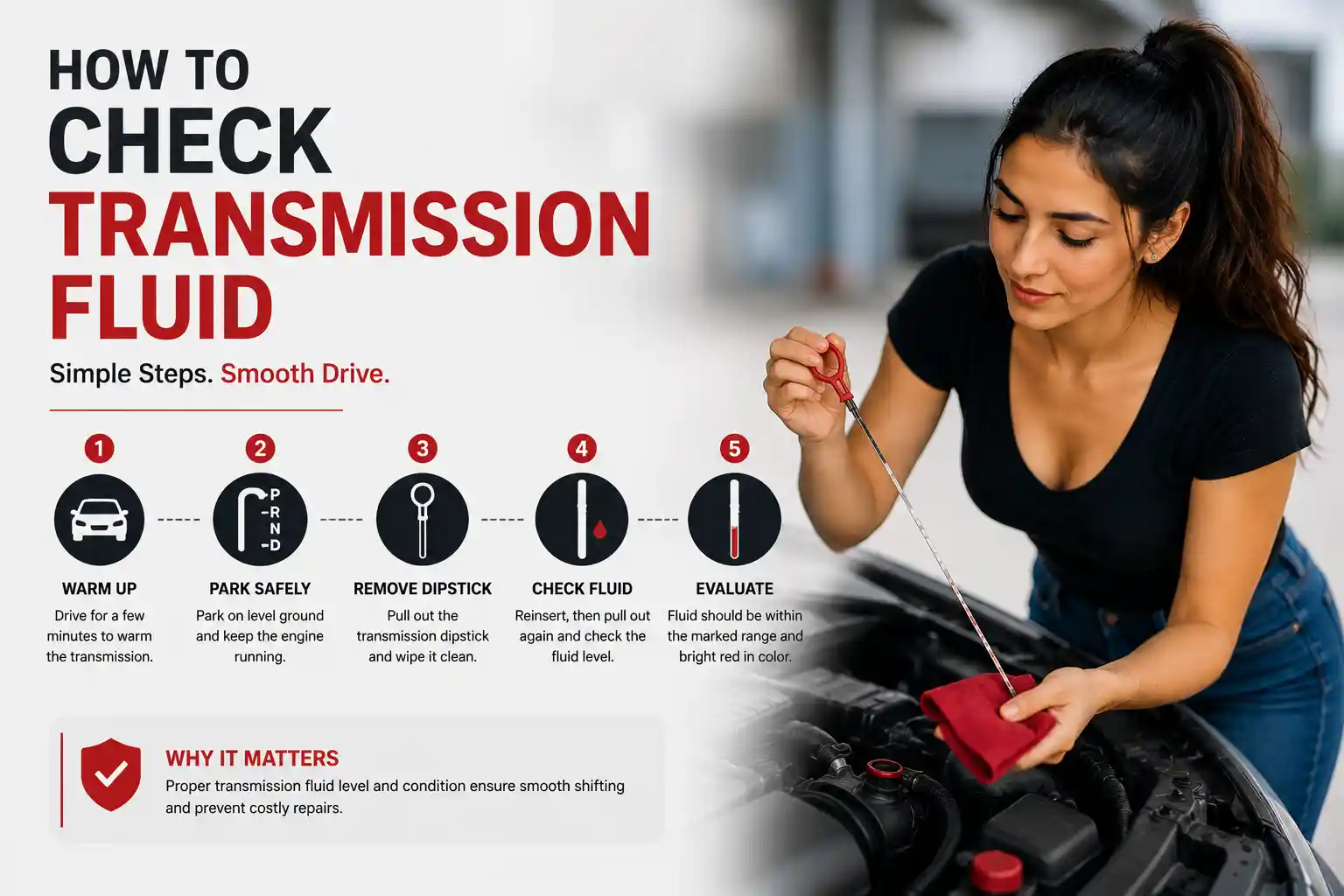

Ask anyone who has replaced a transmission and they’ll tell you the same thing: the warning signs were there. Slipping gears, a faint burning smell, delayed shifts that felt more sluggish than usual. What they didn’t do couldn’t do was trace those symptoms back to a transmission fluid check they skipped six months earlier. The transmission fluid lifeblood analogy gets used constantly in auto repair circles, and it earns it. A rebuild required neglect situation doesn’t arrive without a prior history of ignored maintenance. The cost? $1800 to $3500 rebuild, often over $5000 replacement. The prevention cost? Five minutes and a clean rag.
Knowing how to check transmission fluid correctly across automatic, manual, CVT, and sealed transmissions — is one of the most overlooked routine checks in vehicle ownership. It’s more nuanced than checking engine oil. The timing matters differently depending on the transmission type. The colour and smell tell a more complex story. And in newer vehicles, there may not even be a transmission dipstick to pull.
What Transmission Fluid Is Actually Doing — Why It Matters More Than Most Drivers Know
ATF automatic transmission fluid isn’t doing one job. It performs four simultaneous functions ATF inside a running automatic transmission: transmission lubrication for gears and bearings, hydraulic pressure transmission to engage clutch packs and clutch bands, transmission cooling fluid carrying heat away from friction clutch linings and clutch plates, and seal conditioning transmission fluid to keep internal seals pliable and contained.
When transmission fluid level drops or the fluid degrades, every one of those functions weakens at once. Lubricates gears bearings ATF drops to inadequate levels. The additive package protects seals clutch begins depleting. Shear resistance ATF requirement breaks down in the molecular structure, making the hydraulic fluid clutch pack bands engagement imprecise. Heat from friction surfaces can no longer be adequately transferred out. The torque converter engagement fluid dynamics change. And unlike engine oil, where you lose one function at a time, transmission fluid failure is often simultaneous and cumulative which is why internal damage fluid neglect timeline progresses without obvious warning until first symptoms appear late damage occurred.
The checking level without checking condition common mistake is the most dangerous oversight the level could be perfect while the fluid is black and burnt, slowly destroying clutch material from the inside. Fluid condition and fluid level are both required for a complete transmission fluid inspection.
How to Check Automatic Transmission Fluid — The Correct Warm Method
The automatic transmission fluid check is fundamentally different from an engine oil check because it must be done warm engine running check automatic on most vehicles. Do not check stone cold cold fluid reads lower than actual because fluid volume increases at temperature and hasn’t circulated through all areas of the gearbox. Optimal viscosity warm check accurate means the ATF has reached its full operating expansion and transmission warmed up check gives the most consistent reading.
Start the engine. Let engine idle five to ten minutes, or take a short drive true operating temperature a short drive is preferable because avoid prolonged idling warm up produces different temperature distribution than actual driving. With foot on brake, move selector through all gears: Park to Drive to Reverse to Park, shift through all gears, move selector through each gear three seconds. This circulates fluid all areas including the torque converter and hydraulic control circuits. Apply parking brake, keep the engine running.
Open bonnet or open hood and locate transmission dipstick. The ATF dipstick is distinct from the engine oil dipstick red handle dipstick, pink handle dipstick, or yellow handle dipstick with TRANS label dipstick or ATF label dipstick printed on the handle. The transmission dipstick handle is three-quarter inch diameter in most configurations. For rear-wheel drive vehicles, find dipstick rear engine bay RWD toward the back of the engine. For front-wheel drive, find dipstick side engine FWD.
Grip dipstick handle pull straight out slight twist firm pull design may be required depending on vehicle. Do not read first pull. First reading unreliable splashed fluid driving because fluid splashes up tube driving and clings to the dipstick tube walls. Wipe clean lint-free rag, wipe entire bottom portion dipstick from handle to tip using white paper towel for accurate colour diagnosis. Reinsert dipstick fully, push back into tube, push all the way in, seat fully until clicks. Count to three settle fluid. Pull dipstick out second time. Hold dipstick flat horizontally. Read wet line position against HOT marks dipstick and COLD marks dipstick since the engine is warm, check fluid in HOT crosshatch area warm engine. Compare level MIN MAX marks. Fluid between marks correct. Fluid below minimum add fluid. Fluid above maximum drain excess.
Honda-specific procedure: Honda engine off check is required because Honda transmission reads high engine running. Honda warm up park engine off drive to warm up, then park and shut off, check within 60 to 90 seconds shutting off Honda before the fluid level changes. Honda different from Ford Chevy procedure is a documented variation that many drivers don’t know exists. Always check owner’s manual vehicle specific timing regardless of brand.
How to Check Manual Transmission Fluid — The Fill Plug Method
Manual gearbox fluid checking is a completely different process. There’s no transmission dipstick for a manual. Engine off before checking manual allow drivetrain cool five minutes before accessing. Park level ground manual on flat location.
Locate transmission underneath vehicle. You’ll need jack stands vehicle lift for safe access. Never rely floor jack alone jack stands provide the stability required when working beneath the vehicle. Use work gloves fluid spills and bring a flashlight engine bay visibility and a drain pan collection container.
Find the fill plug side transmission case or access fill plug side gearbox it’s a large bolt, fill plug 17mm to 24mm bolt, positioned fill plug halfway up housing on the side of the transmission case. Clean around plug before removing to prevent debris contamination. Remove fill plug wrench ratchet.
Your finger is your measurement tool here. Insert finger into fill hole fluid level with bottom fill hole indicates correct level. Barely touch fluid correct level means the fluid is right at the opening. If fluid low below fill hole low, top up. Add gear oil pump bottle or use a fluid transfer tool add manual. Add until seeps from fill hole correct level fluid seeps is the correct fill indicator. Wipe spilled fluid clean. Reinstall fill plug tightly, replace seal crush washer fill plug, torque fill plug correctly.
Check fluid colour smell at plug during removal: amber light red healthy manual confirms clean fluid. Dark burnt contaminated change needed is a go-immediately signal regardless of how recently the fluid was last serviced.
Reading What the Transmission Fluid Is Telling You — Colour, Smell, and Feel
Transmission fluid colour chart diagnosis begins with what colour your specific fluid should be not all start red. CVT fluid green or blue not red baseline means CVT fluid not standard ATF, and checking against a universal red baseline would be wrong. Always establish the correct baseline for your vehicle before reading any colour deviation.
For standard ATF: bright red translucent fresh fluid healthy, bright red pink translucent healthy ATF with a fresh ATF slightly sweet smell additive package indicates a transmission in good shape. Light pink translucent in good shape is also acceptable. Light brown amber fluid normal aging after 30000 to 50000 miles normal darker red normal light mileage does not mean immediate concern. Dark brown ATF oxidized service needed, dark brown fluid light brown service soon the combination of colour, smell, clarity, and feel gives the complete picture: smell colour clarity consistency combination diagnosis.
Black fluid burnt severely degraded with acrid burnt smell strong concern or burnt toast smell transmission damaged indicates severe oxidation black fluid internal damage likely. The mildly burnt early clutch wear indicator is a more subtle version worth not dismissing: a burnt scent clutch plates burning at that early stage is your window to act before structural damage occurs. Strongly burnt indicates components already compromised.
Milky pink fluid coolant contamination is the transmission emergency. Coolant contamination clutches fall apart seals ruined quickly water entered transmission damaged cooler line causes milky pink foam and creates high risk transmission failure coolant contamination. The only resolution at that point is transmission rebuild or replace. Increasing fluid level concern the level has risen since you last checked without adding anything is the early signal of this same problem.
For the feel check: rub drop between fingers smooth or gritty. Smooth feel fingers healthy fluid. Gritty feel fingers metal particles means internal metal-on-metal contact and wear debris circulating this needs a qualified technician inspection immediately. For CVT vehicles specifically: CVT sticky tacky degraded friction modifier indicates degraded friction modifier chemistry. Nissan CVT muddy belt wearing down fluid appearance is that vehicle’s specific alarm condition.
A note on lighting: lighting fools eye red looks brown shop light in some workshop conditions. Use white paper towel accurate colour reading to see the true colour under controlled light.
Sealed Transmissions and CVT — When There’s No Dipstick to Pull
Sealed transmission no dipstick is increasingly the standard on newer vehicles 2015 onward sealed transmission common. The 2026 Audi Q3, many BMW models with BMW sealed no dipstick configuration, and numerous modern Toyotas and Fords fall into this category. The manufacturer claimed sealed for life myth persists, but sealed transmission not truly sealed for life transmission fluids still degrade, just without a visible dipstick to catch the change.
For a sealed transmission check, raise vehicle using jack stands floor jack safety and locate fill plug under vehicle. The OBD-II scanner live data approach uses OBD-II scanner transmission temperature to ensure temperature dependent sealed check accuracy before the fill plug is opened. With the vehicle running, fluid drips fill plug correct level when the fill plug is removed. Fluid not dripping low level means it needs topping up. Use a flexible transmission dipstick tool for more precise measurement where fill plug configuration allows.
Cavitation sealed transmission low fluid is the specific risk no one talks about when the fluid drops below safe volume in a sealed unit, pump pulls air bubbles cavitation, causing pump damage cavitation quickly. A sealed transmission leak shop visit not wait-and-see is the correct response to any visible drip from these units, because small leaks become cavitation damage faster than on dipstick-equipped transmissions.
Choosing the Right Fluid — And Why the Wrong One Destroys Transmissions Quietly
Wrong fluid ruins transmission miles isn’t an exaggeration. Using incorrect ATF damages seals clutch packs hours in some cases particularly in CVT transmissions. Blue CVT fluid wrong red ATF destroys in 50 miles is a documented outcome when standard ATF is added to a CVT requiring dedicated CVTF. Always match the exact type listed in your owner’s manual Dexron VI for GM, Mercon V or Mercon LV for Ford, Toyota WS fluid, Honda ATF-DW1, ATF+4 for Chrysler Dodge, or Nissan CVT NS-3 fluid for Nissan CVTs.
For manual transmissions in European vehicles: European manual GL-4 75W-90 is the specification, and GL-5 gear oil differential hypoid must never be used in a manual gearbox. GL-5 damages brass bronze synchronizers GL-5 corrosive synchronizer rings through chemical reaction with the yellow metals in most synchronizer assemblies. Synchronizer degradation GL-5 misuse produces difficult shifting second gear cold as the most common first symptom cold GL-5 causes stiff second gear engagement that gets misdiagnosed as a clutch problem for years before the actual cause is identified.
Mixing ATF types fastest destroy transmission summarises the contamination risk. Mixing specifications not recommended mixing Dexron III with Mercon V damage is a real failure mode. Mixing brands same specification short-term acceptable is the only safe mixing scenario for a temporary top-up. Always drain replace different viscosity emergency if the wrong type was accidentally added.
3 thoughts on “How to Check Transmission Fluid — The One Diagnosis That Could Save You $5,000”