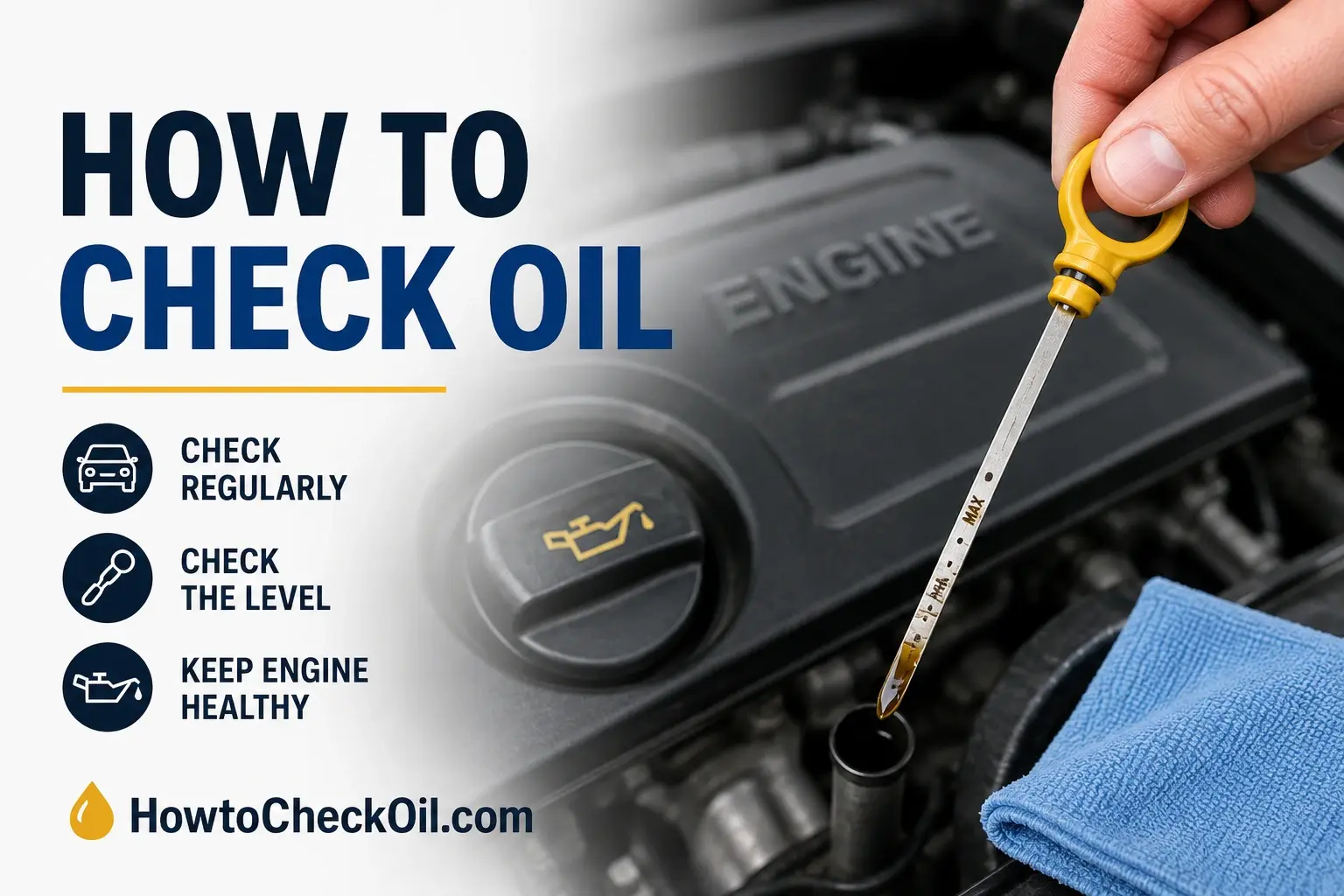

First time I popped the bonnet on my first car. My hands were shaking. I’d heard stories about catastrophic engine failure from low oil level and didn’t want to become another statistic. But here’s the truth, checking motor oil is one of the simple car maintenance task that any driver can master how to check oil in just 10 minutes .
Why Bother? The Real Story Inside Your Engine
I wanna explain from my personal experience what’s actually going on under that hood. Engine contains metal components such as pistons and engine cylinders that vibrate thousands of times/minute. Friction would reduce those mechanical parts to scrap metal within few seconds without lubrication. The lubricating oil which forms a layer between the moving surfaces is called engine oil which helps to wear the surfaces and also removes heat. With time, the impurities, micro residue, and the contaminated particles accumulate. That’s why oil changes aren’t just a suggestion they’re maintenance responsibility.
When Most Drivers Get It Wrong
Many people wait for the oil level warning light on the dashboard or digital dashboard monitor alert before lifting a finger. Big mistake. By the time that warning lights comes on, low oil pressure may have already caused irreversible damage to bearings and other internals. A friend of mine ignored his electronic oil sensor reading for months. Ended up needing a new engine. Trust me, expensive repairs from oil consumption problems are no fun.
Step 1: Pre-check Prep – Setting Yourself Up For Success
Park on flat land. When you have a slope, it will also give you a false reading. Park the transmission (or the first gear in the case of a stick-shift car). Turn on the parking brake. Here’s something most guides skip, check cold, first thing in the morning if possible. An engine that is hot will force oil into the crankcase and sump causing you not to get the correct reading of the oil until it has cooled down. Wait 5-10 minutes after switching off the operating engine before inspection.
Step 2: Locate the Dipstick – Find That Little Guy
Open the hood with the hood release lever located in the car and unleash the hood safety catch. Look for a thin metal rod with a brightly coloured plastic handle – usually yellow color, orange handle, or red. Other cars in the modern world and new Ford models since 2016 have the benefit of having advanced electronic oil gauges instead of the conventional dipsticks. With one of them, look at your center-stack display or digital instrument cluster. But for the rest of us, find that small tube where the dipstick lives. Can’t find it? Look in your owner’s manual or vehicle owners handbook. The position depends on the vehicle make, model and the year of manufacture of the car. It is close to the engine block on the right hand side of the engine bay on most petrol and diesel cars, and is usually identified with an oil-can sign.
Step 3: Pull and Clean the Dipstick
Grab the dipstick ring or handle and pull it out. Now, grab a dry cloth, clean cloth, paper towel, kitchen towel, or clean rag. Wipe the entire metal rod clean. You’ll see marks near the bottom – could be two lines, two pinholes, notches, crosshatching, hash marks, or the words MIN, MAX, letters L, H, or low, high. Some have a cross-hatched area in the middle. This is your gauge.
Step 4: Take a Reading – The Moment of Truth
Reinsert the dipstick all the way back into its pipe. Push it down until it seats. Pull it out again slowly. Look at the oil streak on the end. The current oil level should be between the lower line ( minimum mark, Min(imum), low mark) and the upper mark ( Max(imum), highest line, high). If it’s at or below the minimum safe level, you need to add oil.
If the oil color looks black, brown, or dark, that’s normal after some mileage. But if it’s foamy type, golden type (when it should be dark), or looks like contaminated with coolant (milky), get to a mechanic – your gasket fails might be the culprit. Clean engine oil should look amber. Dirty engine oil means it’s time for oil-and-filter changes.
Step 5: Wait and Re-check – Because One Look Isn’t Enough
Here’s a trick I learned after years of Palm Beach Gardens driving, after reading, wipe it clean again, reinsert, and pull a second time. Wait and Re-check. The first pull can drag oil up the small tube. The second reading is your real proper oil level.
How to Top Up Without Making a Mess
If you’re one quart low or between the low mark and maximum, grab your bottle of engine oil. But stop – don’t just pour anything in. You need the correct viscosity and specification. Check your owner’s handbook for the correct grade like 0W-20, 5W-30, or 5w30. The ‘w’ stands for winter. Using the wrong oil can hurt performance and fuel economy. Use the Oil Finder tool or Where to Buy tool on Castrol engine oils, Shell, or Mobil websites. Many offer oil matching services by registration, make, model, year, and fuel information. You can also ask a trained technician at a local Jiffy Lube service center or service station.
To add oil, Remove the oil filler cap under the hood – look for the word ‘oil’ or outline of an oil can. Place a funnel in the hole. This prevents spills on hot components or the engine bay. Pour small amounts – start with half a quart (about 16 ounces or 0.5 litre). Better to add little at a time than overdo it. Wait one minute for oil to drain into the oil tank (the sump or crankcase). Re-check the dipstick. The oil line should be between minimum and maximum – ideally halfway or near the upper mark but never over the maximum mark. Overfill can cause overheat and damage seals. Repeat until you reach the safe zone or safe side.
Screw the oil filler cap back on tightly. Close the bonnet.
Regular Top Ups vs Full Oil Changes
Regular top ups keep you drivable between services. But eventually you need a complete oil change. That includes putting the car on a flat, laying a drain pan under the oil drain plug of the engine block, removing the plug (in some cases with a wrench) and allowing the old oil to drain out. You will also have to change the oil filter through an oil filter wrench, change the filter with a new one and change the gasket. This is messier. I wear disposable gloves and old clothing because drips happen. Use a sealed container like an oil recovery container for the old oil, then take it to a recycling facility or service stations with drains that accept used oil. Never pour it down street drains.
Many drivers prefer to visit a qualified professional at an oil change facility or quick lane service like Jiffy Lube Signature Service Oil Change. They’ll handle the oil filter cap, drain everything, and re-fill with new oil in about two minutes of actual work (though you wait longer). Some even offer complimentary fluid top off service for vital fluids between changes.
Reading Your Car’s Signals
Modern vehicles with intelligent oil life monitoring ( IOLM ) use electronic oil monitors and sensors to track viscosity, efficiency, and physical properties of the oil. You might see an alert on your digital dashboard monitors or a oil level warning light. But don’t trust sensors blindly. I check manually on a regular basis – especially before a long trip or long journey.
The majority of the vehicles have a self-check system that indicates the amount of oil on the center-stack display or digital instrument panel. Some only have dash lights. The outmoded dipstick is never deceptive.
How Often? Real Numbers for Real People
Frequency depends on your engine type ( petrol, direct injection, indirect injection, diesel, or diesel particulate filter ), mileage, and driving conditions. Here’s my rule from years behind the wheel: Check once a week if you do short trips or cornering on Lake Worth roads. Check once a month at minimum, even on newer cars. Do a complete oil change every 3,000 miles to 10,000 miles depending on your car. Full synthetic oil can go 7,500 miles or more. Your automotive manufacturer gives manufacturer’s recommendations in the owner’s manual. Twice a year is the absolute minimum for checking oil level even if you don’t drive much. Before any long trip over 2,000 km, check everything. I helped a neighbor with a diesel Volkswagen last week. He hadn’t checked his oil level in one month. It was down a full quart. That’s stress on the working life of the engine that could have been avoided with 10 minutes of work.
What About Electric Vehicles?
If you have an EV Vehicle, you don’t have engine oil to check. But you still have mechanical parts in the gearbox that use lubricating oil. Check your vehicle owner’s handbook.
Common Mistakes I’ve Made (So You Don’t Have To) Checking on a slope – the reading was off by half a quart. Forgetting to wipe it clean before the first read – pulled oil up the pipe and thought I was full. Adding oil to a hot engine without waiting – got a false low reading and overfilled. Using the wrong oil – my engine sounded like a gas diesel engine hybrid (not in a good way). Losing the oil filler cap – had to drive to the service center with a rag stuffed in the hole. Not having a funnel – spills on the engine block smell terrible for weeks.
Easy Steps for Newbies and Early Age Drivers
This isn’t a big problem. Here are the basic steps in plain language: Park on level ground. Set brakes. Turn off the engine. Wait 5 to 10 minutes. Pop the bonnet (pull hood-release lever inside, then safety catch under hood). Find the dipstick (look for yellow color, orange handle, or red handle with oil-can symbol). Pull and Clean the Dipstick with a clean rag or paper towel. Dip it back in all the way. Check the oil level – look for two lines, cross-hatched area, low mark and high mark, or words MIN, MAX. If below minimum, top up using correct grade and funnel. Re-check before closing the hood.
When Things Get Serious
If you see low oil pressure warning, pull over immediately. Metal on metal contact destroys bearings, pistons, and engine cylinders in minutes. Permanent engine damage happens fast. Call 24/7 roadside assistance if you have breakdown cover. Low oil level is one of the top 10 causes of breakdowns on streets and highways.
Also watch for oil level warning light that stays on after you’ve topped up. That could mean a faulty electronic oil sensor or a deeper engine problem. Don’t ignore it.
Keeping Records for Service History
Write down dates and mileage every time you check or change oil. This helps with MOT (exhaust emission levels can be affected by old oil), resale value, and knowing when your next oil change interval is due. Some automotive manufacturer systems require you to reset the oil change light through the reset button in the speedometer or fuel gauge area – usually with ignition on but engine off.
A Word on Diesel Specifics
If you have a diesel with a diesel particulate filter, using the wrong oil can clog the filter. That’s an expensive repair. Always follow technical specifications like ACEA, API, or VW approvals. Your owner’s handbook lists these basic parameters.
What About Jiffy Lube and Quick Services?
I’m not paid by them, but I’ll say this: places like Jiffy Lube offer Jiffy Lube Signature Service Oil Change that includes oil filter replacement, top off of vital fluids, and a check of safe oil levels. For busy drivers in West Palm Beach, Delray, or Lake Worth roads, that’s a solid option. But even then, learn DIY basics. I’ve seen service centers forget to tighten the oil drain plug or double-gasket the oil filter. Knowing how to check your own oil level lets you catch their mistakes.
The Maintenance Responsibility Reality
Look, cars today are reliable. But neglect kills them slowly. Oil consumption increases with age. Modern vehicles burn some oil by design – it’s normal. But if you never check, you’ll eventually face catastrophic engine failure. I’ve seen it happen to friends who thought regular oil changes at 10,000 miles meant they never had to look at the dipstick in between.
Make checking oil part of your car care routine every fill up or every few weeks. It takes two minutes once you’re good at it. Step-by-step guide above should get you there.
One Last Thing About Level Ground
I can’t stress this enough. Even a slight slope changes the oil level reading by a quart or more. The sump is shaped to hold oil level when the car is horizontal position. If you park on a hill, the oil pools to one side. You’ll either think you’re low when you’re fine, or full when you’re dangerously low. Find a flat surface like a parking lot or level ground driveway.
If You Have High-Tech Electronic Oil Monitors
Some modern vehicles and new Fords ( 2016 and later) use IOLM intelligent oil life monitoring. They track mileage, engine running time, temperature, and driving patterns. But even then, electronic oil monitors can fail. I still check manually once a month. The electronic oil sensor might say safe when you’re actually at the minimum safe level. Traditional dipsticks don’t have software glitches.
Final Practical Tips Before You Go Pop Your Hood
Keep disposable gloves, kitchen towel, and a bottle of engine oil in your trunk. Buy small amounts of oil ( 1 litre or one litre ) so it’s fresh. If you have a diesel particulate filter, double-check oil specification. Never mix wrong oil if unsure, drain and start over with help from a trained technician. Overdo nothing. A couple of minutes of care saves thousands in repairs.
Your Step-by-Step Guide Recap in Two Sentences
Park level, wait for cold engine, pop hood, find the dipstick, wipe it clean, dip, read between minimum and maximum marks. Add little at a time through funnel via oil filler cap, re-check, close bonnet, drive easy. Now go check your oil level. Your engine will thank you with better performance, lower fuel use, and many more miles of happy driving on Palm Beach Gardens driving roads, Lake Worth roads, or the streets of West Palm Beach and Delray.
10 thoughts on “How to Check Oil: Complete Guide for Engine, Brake, Transmission & Oil Pressure”