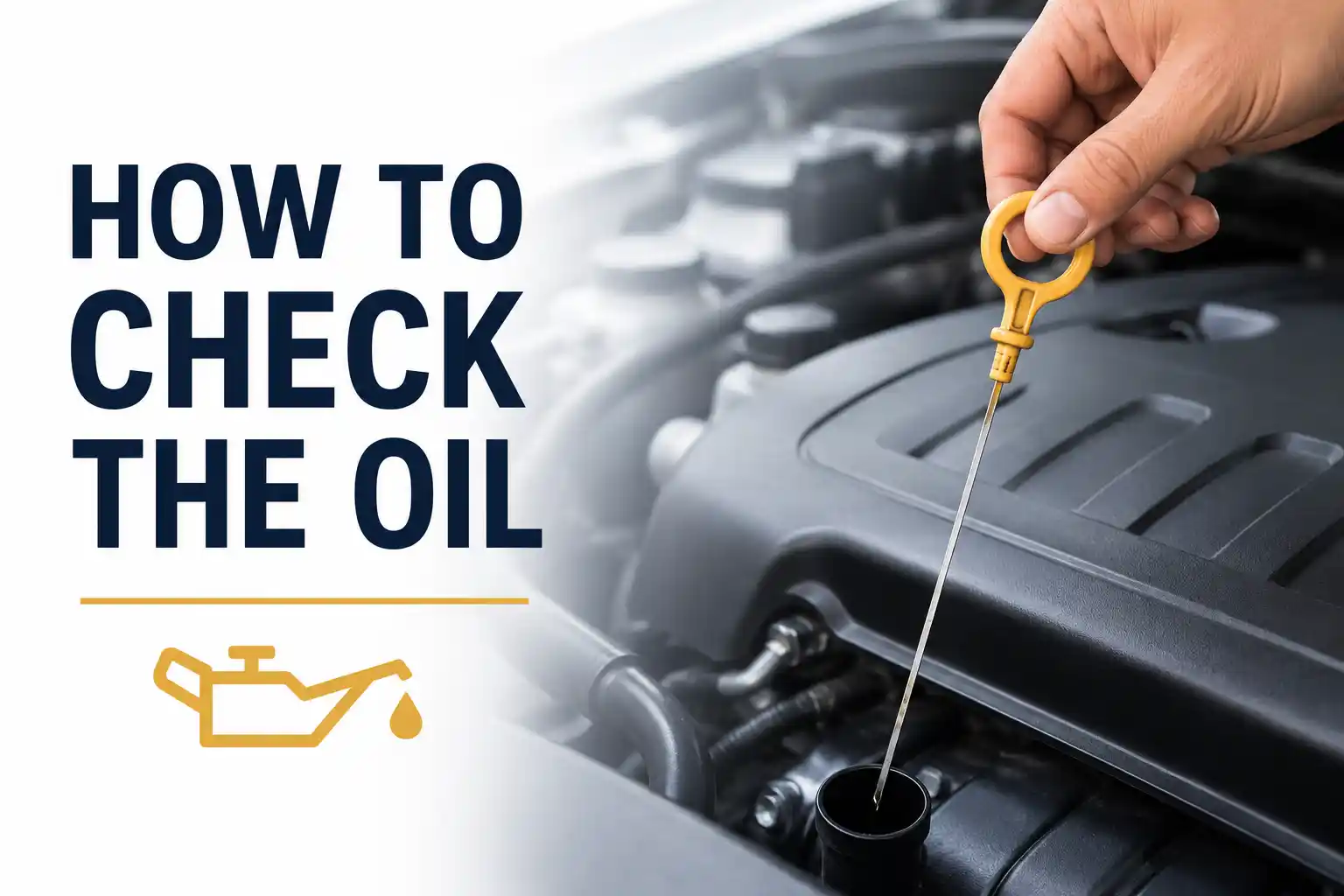

Most people wait for the oil warning light to flash on the dashboard before they even think about engine oil. By that point, you’re already behind and depending on how long the oil pressure warning has been ignored, your engine could be silently paying for it. I learned this the hard way years ago with an older Subaru that started ticking on cold mornings. Turns out it was just low oil level, but the anxiety of not knowing? That sticks with you. Ever since, checking oil has become a non-negotiable part of my car care routine, and it should be part of yours too.
The truth is, knowing how to check the oil is one of the simplest, cheapest, and most underrated forms of preventive maintenance you can do. You don’t need a service center, a certified technician, or an ASE-certified professional standing over your shoulder. All you need is about 10 minutes, a rag or paper towel, and a basic understanding of what you’re looking at.
Why Your Engine Oil Level Matters More Than the Oil Change Interval
There’s a common misconception that as long as you stick to your oil change schedule whether that’s every 3000 miles, 6000 miles, or 10000 miles you’re covered. But oil change interval and oil level are two entirely separate conversations. Even with regular maintenance, your internal combustion engine can quietly consume oil between services. Some vehicles burn through nearly 1 quart per 1000 miles without triggering a single dashboard warning. At that rate, by 3000 miles your engine could be running dangerously low.
Engine oil does more than just lubrication. It handles engine cooling, prevents engine corrosion, fights engine sludge buildup, and keeps every moving part from the crankshaft to the pistons separated by a critical lubricating film. When engine oil level drops below the minimum mark, metal-to-metal contact becomes a real risk. That leads to engine wear, and if left unchecked, outright engine damage that no quart of oil can undo.
Modern vehicles, including newer Ford models built after 2016 with intelligent oil life monitoring (IOLM), offer electronic oil monitors that alert you when oil approaches minimum safe levels. But even these sensors can fail without any warning. The oil sensor tells you what it detects not what it missed. That’s why manual checks remain essential, even for drivers of the most current models.
The Right Time and Place to Check Your Oil — It Matters
Even before opening the bonnet, two conditions should be met. These include parking the car on level ground and ensuring that the engine is cool or at least allowing it ten to fifteen minutes to cool after switching off the engine. The former introduces an incorrect measurement at the very outset, while the latter ensures that oil in the engine expands due to heat, affecting the accuracy of your measurements.
That said, your owner’s manual should always be your first reference. Some manufacturers particularly for diesel engine applications and certain European models sold under ACEA specification guidelines recommend checking oil level with a warm engine about 5 minutes after shutdown. Your manufacturer recommendation overrides everything else written here.
The best habit I’ve personally developed is checking oil level every fill-up at the gas station. It takes under 2 minutes and keeps you ahead of any low oil level surprises. At minimum, check it once a month, or always before a long road trip.
How to Check the Oil Step by Step Using the Dipstick
Open the bonnet of your car and secure it properly. Locate the oil dipstick in the engine bay. This is normally marked by an orange or yellow-colored stick labeled “Oil”. In some cases, it may be located inside the engine and you should refer to the owner’s manual to find its location.
Using either a paper towel or a lint-free rag, remove the dipstick gently from its tube. Do not turn it over while pulling, because this may cause the oil to spill out into the engine compartment. Clean the dipstick thoroughly from top to bottom using your cleaning material. Then reinsert it fully into the tube. Make sure that it is firmly inserted.
Now read both sides. The oil level reading you’re looking for is the lowest consistent oil streak across both sides of the stick. Every dipstick uses one of several indicator formats: two pinholes or dots (lower hole = Low, upper hole = Full), MIN and MAX labels, L and H markings, or a crosshatch area representing the safe operating range. If the oil streak falls within the crosshatched dipstick area or between the two marks, your engine oil level is good.
If the oil level falls below the minimum mark or the lower line, you need to add oil. Start by adding half a quart about 16 ounces through the oil filler cap using a clean funnel. Pour oil slowly, wait a minute or so, and recheck the dipstick. Add the rest of the quart only if the dipstick still reads low. Overfilling past the maximum mark causes oil aeration as the crankshaft churns through excess oil, producing foam in engine oil that strips away the lubricating film and causes real harm.
Reading the Oil Itself — Color, Condition, and Warning Signs
Pull that dipstick out and most people immediately look at one thing how high the oil sits on the stick. Fair enough, but you’re leaving half the information on the table. The oil itself has plenty to say if you know what to look for.
Fresh oil runs a warm amber, almost golden when you tilt it toward the light. That transparency doesn’t last. Every heat cycle pushes it darker first toward a muddy brown, eventually to something close to black. Here’s the thing though: dark oil isn’t automatically a red flag. Engines do that. Stick to your maintenance schedule and stop using color as your only trigger for an oil change.
What genuinely warrants stopping everything is a pale, milky smear on the stick. That’s not grime that’s coolant finding its way into the oil, and the two have absolutely no business being mixed together. Take the car to a mechanic before you drive it further. No exceptions.
Shiny flecks or a gritty texture in the oil are equally alarming. Metal particles don’t just appear something inside the engine is wearing away, and every mile you add makes the situation worse.
Fuel dilution is a sneakier problem. If the oil carries a noticeable smell of diesel, blow-by may be thinning it out, stripping the additive concentration down and leaving your engine with less protection than the grade on the bottle promises. One old-school way to confirm water contamination: dab a drop from the dipstick onto a hot exhaust manifold. A sharp crackling sound like a drop of water hitting a hot pan means water is present in the crankcase.
One thing most drivers never think to check is whether the oil level has actually gone up between readings. If you haven’t added a drop and the dipstick reads higher than last time, don’t shrug it off. Combustion produces water as a byproduct, and in cold or short-trip driving conditions, some of that moisture never fully exits through the tailpipe it settles into the oil instead. For anyone running a flexible fuel vehicle on an alcohol-gasoline blend, this is even more pronounced. A rising oil level points to contamination, not abundance.
Understanding Motor Oil Types and Viscosity for Smarter Checks
Once you know you need to top up, the next mistake most people make is grabbing whatever bottle is closest on the shelf. Oil type and viscosity aren’t interchangeable, and putting the wrong one in isn’t a neutral decision.
Viscosity is simply how freely the oil moves how resistant it is to flowing through tight spaces under pressure. The SAE grading system puts a number to that. Take something like 5W-30: the figure before the W describes behavior during a cold start, and the W itself stands for Winter. The number after the dash reflects how the oil behaves once the engine has fully warmed up, somewhere around 212°F. Lower numbers mean thinner, faster-flowing oil. Higher numbers mean a thicker film.
That distinction matters more than people realize. A 0W-20 reaches the farthest corners of a cold engine almost immediately after startup exactly what tightly machined modern engines are built around. A 10W-40 or 20W-50 holds a heavier film at operating temperature, which suits older engines or those already showing wear, but it won’t circulate as quickly when the temperature drops.
In terms of different types of oil like full synthetic oil, conventional oil, synthetic blend oil, semi-synthetic oil, and high mileage oil, there is one common issue that needs to be taken into consideration, and that is the ability of the oil to retain its protective properties when exposed to heat and pressure. The fact is that conventional oil, which is produced out of crude oil, loses its efficiency quicker than other oils.
Still, the oil type isn’t the finish line. Two bottles with identical viscosity grades can perform completely differently depending on what’s in their additive package how the detergent and dispersant handle deposits, how effective the antioxidant protection is, how well the friction modifier and anti-wear additive hold up under load, and whether the viscosity index improver and inhibitor chemistry matches your engine’s actual requirements. Your owner’s manual will specify the exact grade and certification needed whether that’s API SP, GF-6, or an ACEA specification for a European-market vehicle. Match that first. Everything else is secondary.
Vehicles Without a Traditional Dipstick
Some modern vehicles have moved away from the traditional dipstick entirely. Checking oil level in these cars is done electronically through the infotainment system or the driver instrumentation cluster. The process varies by brand, so consulting your owner’s manual is non-negotiable here. What doesn’t change is the frequency even electronic oil level monitoring should be checked regularly, not just when a service light tells you to.
For vehicles with a dipstick, the oil dipstick oil analysis test is still one of the most dependable, affordable methods of monitoring engine condition in-between service visits. No tools, no appointments, no costs. Just a rag and 10 minutes of your time.