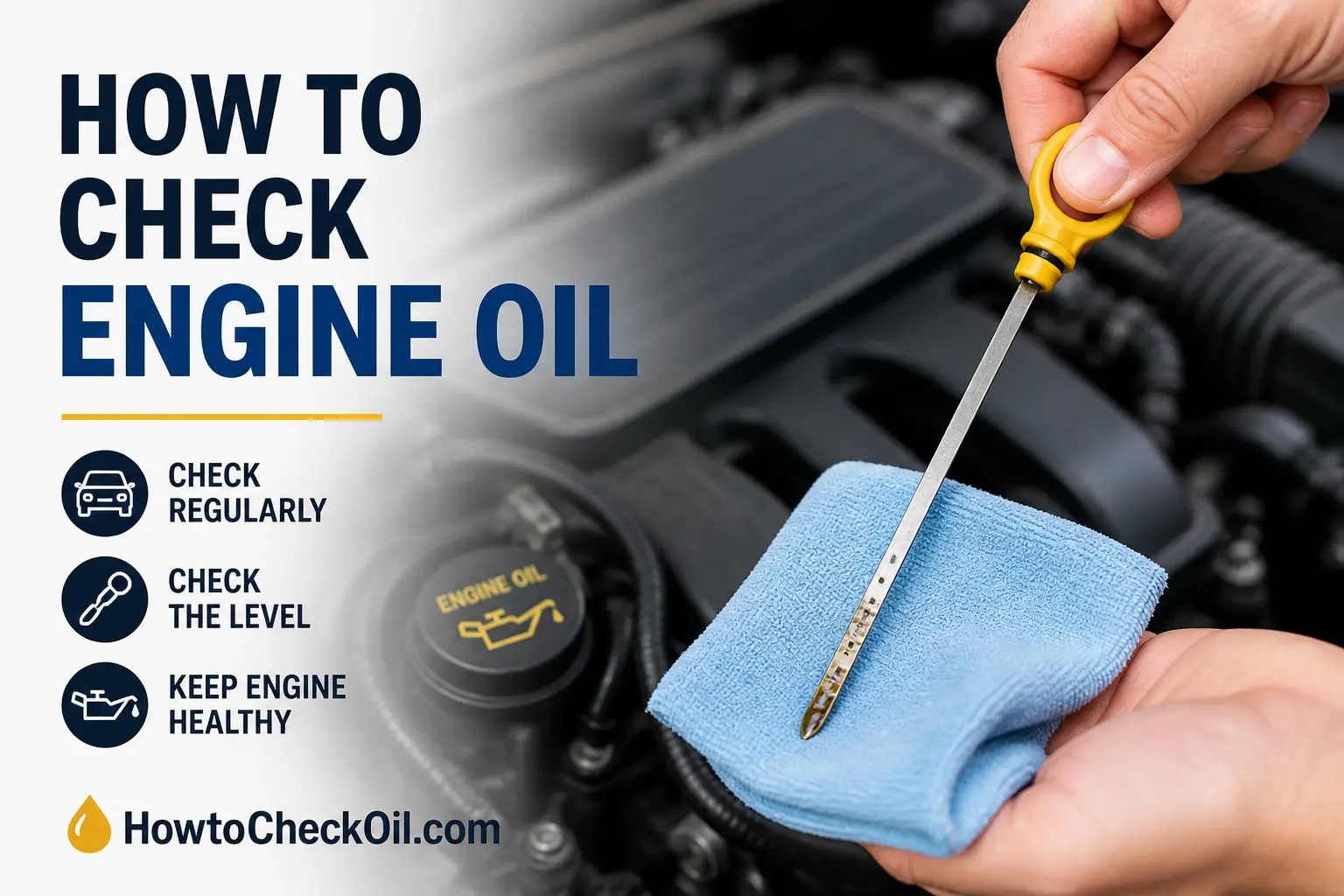

Here’s something a little uncomfortable: most drivers have never once checked their engine oil themselves. They wait for a warning light, or they let the dealership tell them something’s low, or they just kind of hope for the best. I get it it sounds more mechanical than it is. But honestly? The whole process takes about two minutes, requires nothing but a rag, and could easily save you from an engine repair bill that runs into thousands of dollars. Once you’ve done it a couple of times, it feels about as complex as checking your mailbox.
Why Checking Your Engine Oil Actually Matters
Inside yourengine, there are many metal pieces that move around, such as pistons, valves, and the crankshaft, running fast and hot enough to melt plastic. Engine oil is what makes sure these pieces do not wear out on each other. It’s not just a lubricant for moving pieces but also acts as a coolant for the parts that the cooling system cannot cool and traps debris and bits of metal so they don’t get into the engine forever.
Let the oil level drop too low, and the consequences come fast. Engine wear accelerates. Engine overheating becomes a real risk. In the worst cases, you’re looking at complete engine seizure and at that point, no amount of oil is going to fix it. Overfilling isn’t harmless either. Too much oil causes foaming and aeration, which tanks your oil pressure and actually makes the oil worse at its job. There’s a sweet spot, and finding it is the whole point of the check.
What You’ll Need Before You Start
Nothing fancy. Grab a clean rag, a paper towel, or a lint-free cloth whatever you have nearby works. If your oil turns out to be low and you need to top up, you’ll want a funnel to avoid making a mess on the engine and a spare quart of the correct oil grade for your car. Some people wear gloves for this, which is completely reasonable if you don’t want oil on your hands. What matters most before you even open the hood is where you park: always do this on level ground. Checking oil on a hill gives you a false reading, and you’ll either add too much or convince yourself everything’s fine when it isn’t.
Worth knowing: a lot of modern vehicles now have a digital oil sensor that pushes oil level info to your instrument cluster or dashboard warning light system. That’s a nice convenience, but those electronic sensors can fail, and they don’t tell you anything about oil color or oil condition. A manual dipstick check takes 90 seconds and gives you information no sensor can.
How to Check Engine Oil Step by Step
Park your vehicle on a flat surface and switch off the engine. Allow a few moments to elapse, depending on whether you have just been driving. You may have to wait between five to ten minutes, but sometimes eventen to fifteen minutes so that the warm oil flows back into theoil pan or oil sump. The importance of this lies in two ways you will get an accurate reading, and you will be prevented from gettingscalded by the hot oil if you remove the dipstick.
Open up the bonnet and check out for oil dipsticks. Oil dipstick is usually located towards the front portion of the engine compartment, easily identifiable by its bright yellow ororange color. Dipsticks usually have oilcan-shaped handles and have the label “OIL” or some other markings. Now remove the dipstick from the engine entirely. Clean the dipstick thoroughly using the lint-free cloth orpaper towel. Insert the dipstick into the engine compartment and pull it out again. This step is commonly referred to as wipe and reinserting the dipstick. It is very important to clean the dipstick before takingreadings, otherwise, you will get incorrect readings due to the presence of oil on the dipstick. Slowly pull out the dipstick and keep it horizontal. On the lower end, there are two reference points MIN or LOW and MAX or FULL.
Reading the Oil Level and Color
Checking the oil level is the most evident action to take, however, oil color also speaks volumes about the oil condition. Good oil is clear in its appearance, it has clean amber color and appears smooth and transparent. When rubbed between fingers, good oil feels slippery, not grainy. Brown oil or oil having nearly black color indicates that it needs to be changed since it is dirty. Foamy oil is a symptom that requires attention it means that some other fluid such as coolant got into the engine oil.
If there is any sign of sludge present on thedipstick, or if theoil appears to be very thick orunusual in consistency, or if you have noticed any signs ofburnt oil or engine exhaust during yourdrives, then these all indicate one thing: the oil has not been changed for too long a period of time.
How to Add Oil If the Level Is Low
First, find out the right oil grade it’s printed on your oil cap and in your owner’s manual. Most everyday cars run 5W-30 or 10W-40, but don’t guess. Some engines require full synthetic meeting specific standards like API SN category; using the wrong grade consistently isn’t going to help your engine health. If your owner’s manual calls for synthetic oil, use it.
Take off the oil cap the one with the oil can symbol or “OIL” printed on it and drop in your funnel. Don’t dump the whole quart in at once. Start with 200–300 ml, wait about a minute for the oil to settle into the oil pan, and recheck the dipstick. Keep adding gradually until the level sits comfortably between the lower mark and upper mark. For reference: adding roughly 1 quart (1 liter) typically brings a reading from the minimum mark all the way to the maximum mark on most cars. Once you’re in range, screw the oil cap back on firmly, wipe off any drips with your absorbent cloth, and close the hood. Done.
How Often Should You Check Your Engine Oil?
Consumer Reports recommends checking your oil every other gas fill-up which translates to roughly every two to three weeks for most people. Honestly, once a month is a good personal habit to get into. It costs you nothing but two minutes and keeps you from being blindsided. If you do a lot of city driving with heavy stop-and-go traffic, your engine works harder than it does on open highway driving, and oil consumption can be a bit faster.
The old “every 3,000 miles” oil change interval rule? It’s outdated for most cars made in the last 15 years. Most modern engines can go 5,000 to 7,500 miles between changes. With quality synthetic oil, some stretch to 10,000 miles. But mileage isn’t the whole story oil degrades over time even in a car that barely moves, so if you’re a light driver, changing your oil at least once a year still makes sense. Stick to the 5,000–7,000 miles window if you’re not sure, and always check your owner’s manual first. When you do get an oil change done whether at home or at a shop make sure the oil filter gets replaced at the same time. The filter is what catches all the contamination your oil has been picking up, and a clogged one undermines everything.
Warning Signs That Your Oil Needs Immediate Attention
Some situations don’t call for a routine monthly check they call for pulling over right now. The engine oil warning light the oil can icon on your dashboard is the clearest of those situations. If it comes on while you’re driving, don’t push it to the next exit. Low oil pressure causes damage very quickly, and engine seizure can happen faster than you’d expect.
Outside of the dashboard warning light, your ears and nose are useful tools too. Knocking or grinding sounds coming from the engine are a sign that metal parts aren’t getting the lubrication they need. Rough engine noise that’s new or getting worse is always worth investigating. If you find dark puddles under your car after it’s been parked, your oil pan might be leaking. The burning oil smell coming from the engine especially if it’s accompanied by visible smoke means something is getting onto hot surfaces where it shouldn’t be. A small amount of oil consumption between changes is actually normal (the PCV system positive crankcase ventilation gradually burns off a bit as part of regular engine operation), but if your dipstick consistently reads low between changes and you don’t have an obvious oil leak, have a mechanic look at it. Catching something minor early is always less painful than dealing with engine damage later.
Frequently Asked Questions
Q: Should I check my engine oil when the engine is hot or cold?
A: Warm-but-off is the sweet spot. Wait 5–10 minutes after shutting down a warm engine this gives the oil time to drain back into the oil sump while keeping the oil viscosity close to real running conditions. Some manufacturers have calibrated their dipsticks to read correctly on a cold engine too, so check your owner’s manual if you’re unsure.
Q: What does milky or foamy oil on the dipstick mean?
A: It’s usually a sign that coolant has mixed into the engine oil, which can point to a blown head gasket or a crack somewhere in the engine. This isn’t a situation you top up and drive through get it to a mechanic promptly.
Q: Can I mix different brands or grades of oil when topping up?
A: In an emergency, adding the same oil grade from a different brand is fine. Mixing grades is less ideal but won’t cause immediate harm. What you really want to avoid is pouring conventional oil into an engine that requires full synthetic check your owner’s manual first, always.
Q: How much oil should I add if the dipstick reads low?
A: Start small about 200–300 ml then wait a minute and recheck the dipstick. Most engines go from the minimum mark to the maximum mark with roughly 1 quart (1 liter) of oil, but adding gradually protects you from overfilling, which creates its own set of problems.
Q: Does checking my own oil affect my car’s warranty?
A: Not at all. Regular car maintenance including checking and changing engine oil is something you’re expected to do. Skipping it and causing engine damage as a result is the thing that can complicate a warranty claim.
Q: What happens if I overfill the oil?
A: Too much oil causes foaming and aeration inside the crankcase, which reduces oil pressure and makes the oil significantly less effective at protecting your engine. If the dipstick reads noticeably above the upper mark, have the excess drained either yourself if you’re comfortable, or at a service centre.
10 thoughts on “How to Check Engine Oil”