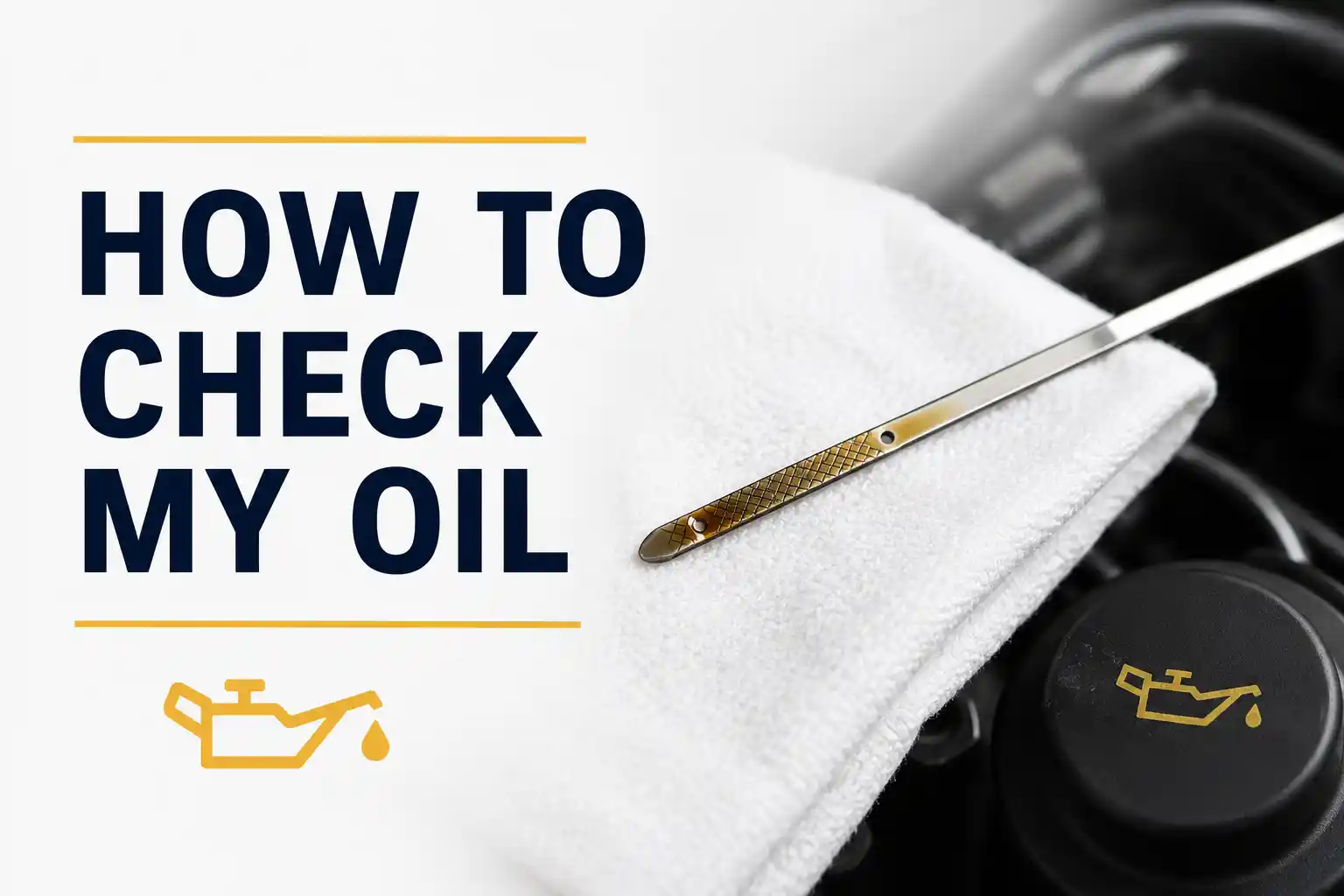

Nobody thinks about their engine oil until something goes wrong. A knocking noise under the bonnet at 60mph, a dashboard warning light that flickers on during a long journey, or worst case a fluid puddle under the car in the morning. Every one of those situations could have been caught earlier with a two-minute check. I know because I’ve been on both sides of it. Years ago, I let a Honda Civic run low without realising it, and what started as engine ticking turned into a repair bill I didn’t budget for. Since then, check my oil has become something I do as automatically as checking the tyre pressure.
If you’ve ever typed “how to check my oil” into a search bar and landed on something that reads like a workshop manual, this is the version written for someone who just wants to get it right the first time and understand why it matters.
Why Checking Your Own Oil Level Is Non-Negotiable for Engine Health
Think of motor oil as the bloodstream of your engine. It handles engine lubrication, engine cooling, corrosion prevention, and sludge buildup prevention all at once. Without sufficient oil circulating through the internal moving parts around the rod bearings, cam bearings, crankcase, and valve cover you get metal-on-metal contact, friction buildup, and heat buildup that no amount of mechanical sympathy will undo.
What catches most drivers off guard is the gap between oil change interval and oil level. You could be perfectly on schedule with your oil change every 5000 miles and still be running low in between. Engine oil consumption varies between vehicles some lose barely a drop, others can burn through nearly one quart per 1000 miles without triggering a single warning. That’s a normal oil consumption range for many older vehicles, but if you’re never checking, you’d never know until the oil warning light forces the conversation.
Modern cars like newer Subaru Outback, Ford F150, Honda Civic, or Toyota Camry models increasingly use electronic oil level sensors or oil life monitors. But an ECU-based system can only report what its sensors detect. OBD scan codes can flag some issues, but they don’t replace the information a dipstick gives you firsthand. Sensors fail. Service lights get ignored. The manual check remains the most reliable method for every vehicle, every time.
Where to Find Your Dipstick and What You Actually Need
You don’t need to book an appointment with a certified technician or drive to a quick lube to check my car oil. Everything required is already in the car. Find yourself a clean rag or paper towel, and that’s genuinely it.
Pop open the hood and prop it securely. Inside the engine bay, locate the oil dipstick the metal rod with a plastic loop or metal loop at the top, usually coloured orange handle, yellow handle, or red handle to make it easy to spot. There’s typically an oil can icon or the word “OIL” stamped on the handle. If the engine layout makes it hard to find some front-wheel drive configurations pack things in tightly, and rear-wheel drive setups vary your owner’s manual will have a diagram. Consult owner’s manual first if you’re working on an unfamiliar vehicle; don’t guess.
One thing worth knowing: there may be additional dipsticks in the engine bay for transmission fluid or other systems. Don’t confuse them. The oil dipstick leads down into the oil sump and crankcase. The others don’t.
The Step-by-Step Oil Check Process That Actually Gives You an Accurate Reading
The most common mistake people make during an oil level check is rushing it. Here’s what a proper check looks like.
Park on level ground flat surface, flat ground, not on a kerb, a driveway camber, or anything that tilts the car. Oil isn’t exempt from gravity, and even a slight slope throws off the oil level indicator inside the reservoir. If you’ve just been driving, wait 10 minutes minimum ideally 15 minutes before checking. This gives the oil time to drain back down into the oil pan and settle into the oil sump. Some manufacturer recommendations call for a warm engine check about 5 minutes after shutdown; your vehicle handbook will clarify which applies to yours.
Turn off engine. With your rag ready, pull out dipstick smoothly and carefully avoid flipping it mid-pull or you’ll fling oil across the engine bay. Wipe dipstick clean from the dipstick handle all the way down the metal rod to the tip. Reinsert dipstick fully back into the dipstick tube push dipstick all the way in until it seats wait a couple of seconds, then pull it out once more. Hold dipstick horizontal and read both sides.
Every dipstick uses one of several indicator formats: two holes or two dots (lower hole = Low, upper hole = Full), MIN MAX labels, L and H markings, or a crosshatch area between two marks. The oil streak you’re looking at should fall within that crosshatch area or between the two marks. Ideally it sits closer to the full mark than the low mark. If it’s below the min line, you need to add oil before driving further.
To top up oil: open the oil filler cap on top of the engine usually labelled “Engine Oil” or marked with an oil can symbol place a funnel in the opening, and pour slowly. Add half a quart first, wait a minute for it to settle, then recheck the dipstick. Add one quart at a time maximum before rechecking. Overfilling past the max line causes oil aeration as the crankshaft churns through the excess, which leads to oil foaming and eventually oil pressure loss. Screw oil cap back on tightly. Check for spills and wipe any up before close hood.
Reading Oil Colour and Condition — What the Dipstick Is Really Telling You
Oil level is only half the story. Oil condition tells you what’s happening inside the engine between services, and it’s information most drivers walk straight past.
Fresh oil appears golden, amber oil or light honey oil almost translucent when tilted toward light. Clean oil that’s been through several heat cycles deepens to brown oil and eventually toward dark oil or black oil. That darkening is normal and doesn’t automatically mean it’s time for a change; follow your maintenance schedule and don’t judge purely on oil colour check alone.
What does demand action immediately is milky oil or creamy oil on the dipstick. That pale, almost whitish coating means coolant mixing with oil is happening inside the engine. Stop driving. This is not a top-up situation it requires a mechanic inspection and diagnosis before the car moves again. Equally alarming are shiny particles or metal particles visible in the oil; metal flakes in used motor oil point to internal engine wear that needs attention fast.
If the oil smells strongly of fuel, fuel dilution through blow-by has thinned the additive concentration and compromised oil viscosity reducing the lubricant’s ability to protect under load. Burning oil smell while driving, or bluish smoke or bluish exhaust coming from the tailpipe, points to oil burning internally. Exhaust smoke that carries a dark or acrid quality after the engine warms up is worth noting and tracking. Each of these is an oil consistency check worth taking seriously.
Recognising Low Oil Symptoms Before They Escalate
Understanding low engine oil symptoms is what separates a driver who catches a problem early from one who ends up needing an engine rebuild. The oil warning light and oil pressure light on the dashboard are the most direct signals but treating them as your primary alert system is a mistake. By the time the oil pressure warning activates, the oil circulation may already be compromised.
Signs that appear before the dashboard warning include engine knocking, engine ticking, engine rattling, or a clunking noise from beneath the bonnet. A rapping noise or grinding that wasn’t there before, particularly during cold start, is worth investigating immediately. Sluggish acceleration and poor acceleration under normal driving conditions can also indicate insufficient lubrication affecting engine performance. Engine overheating without an obvious coolant issue sometimes traces back to low oil level, since oil handles a significant portion of heat regulation within the engine.
The check engine light occasionally activates due to low oil levels as well if the ECU logs a related code during an OBD scan, ask for an oil pressure test as part of the inspection. Oil leak symptoms like oil dripping, oil spots under car, or fluid puddle under car after overnight parking point to a leak that needs a leak check across the oil filter, drain plug, oil pan gasket, valve cover gasket, and timing cover.
An oil level rising between checks without adding any signals a different problem: water in oil from combustion condensation, or coolant contamination entering the crankcase. For short-trip drivers especially, crankcase moisture short trips is a known issue where the engine never gets hot enough to burn off water vapour. For vehicles running on an alcohol-gasoline blend under a flexible fuel setup, this condensation is even more pronounced.
How Often Should You Check My Oil — Setting a Routine That Works
Check oil monthly at a minimum that’s the baseline most service centers and vehicle manufacturers align on. Check oil before long trip without exception; it costs nothing and takes under 2 minutes. Check oil every fill-up is the ideal habit if you want to stay ahead of any oil consumption rising trend, and it’s realistic you’re already standing at the car with time to spare.
As part of any regular maintenance and vehicle maintenance routine, check oil level after oil change to confirm the correct amount was filled, and recheck at 500 miles if you’ve had any service work near the oil system. For higher-mileage vehicles anything past the point where high mileage oil becomes appropriate check oil weekly. Oil consumption in older engines can accelerate, and the difference between catching a low level at 500 miles and letting it run to 1000 miles is often the difference between a top-up and an overhaul.
1 thought on “How to Check My Oil 2026 Complete Guide”